

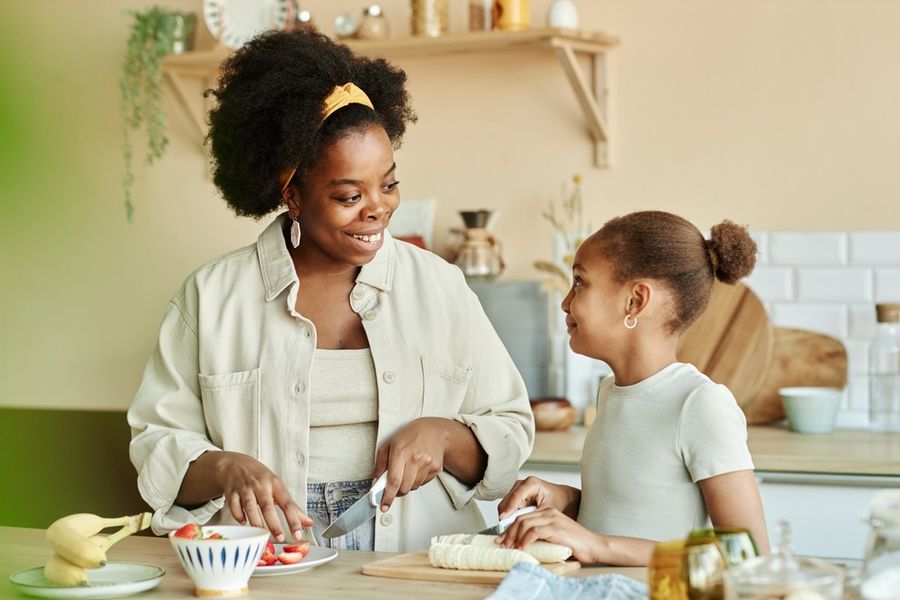
After school, kids often need something quick before homework, sports, clubs, or playtime. The best snacks are simple enough for busy afternoons but still fun enough for kids to help prepare. Snack time can also help kids get more fruits and vegetables into their day. A good snack can be a chance to practice small kitchen skills, such as washing fruit, spreading peanut butter, stirring yogurt, or building a wrap.
1. Banana Yogurt Bites
Banana yogurt bites are a good snack for kids who like something creamy and sweet. Slice a banana into thick rounds, add a small spoonful of vanilla yogurt, and sprinkle a little granola or oat cereal on top. Food Hero’s Banana Bobs recipe uses banana slices, low-fat vanilla yogurt, and oat-and-honey granola cereal.
Kids can help place the banana slices on a plate, spoon yogurt onto each piece, and add the cereal topping. Younger children may need help with the slicing, but the rest of the snack is easy for them to assemble. The pieces can be eaten with fingers, toothpicks, or a small fork.
This snack also works well because it feels a little like dessert without needing cookies or candy. For a slightly different version, swap the granola for crushed whole-grain cereal or add a few sliced strawberries on the side. Keep the toppings light so the banana pieces stay easy to pick up.
2. Peanut Butter Yogurt Dip With Fruit
A peanut butter yogurt dip can make sliced fruit feel more filling. Peanut butter yogurt dip uses plain yogurt, peanut butter, and optional cinnamon, then pairs the dip with fruit or vegetables. Apples, bananas, celery, and pear slices all work well with a creamy dip like this.
Kids can help stir the yogurt and peanut butter together in a small bowl. They can also sprinkle in cinnamon and arrange the fruit on a plate. If peanuts are not safe for the home or school setting, sunflower seed butter can be used instead.
Adults should handle slicing firm fruit for younger kids. Once the fruit is ready, children can take over the simple parts, such as scooping dip into a bowl and choosing which dippers to serve. This gives them a real kitchen job without making the snack hard to manage.
3. Build-Your-Own Trail Mix Cups
Trail mix cups are useful when kids want a crunchy snack they can customize. Do-it-yourself trail mixes are built around letting kids choose from a variety of ingredients. That makes it a good after-school option for children who like picking their own combinations.
Set out a few bowls with simple mix-ins, such as whole-grain cereal, pretzels, dried fruit, raisins, pumpkin seeds, sunflower seeds, or small crackers. Kids can scoop a little of each item into a cup or small container. The goal is to make a snack that feels fun without turning the kitchen into a full cooking project.
This snack is also easy to prep ahead. A parent can portion ingredients into separate containers at the start of the week, then kids can build their own cups after school. For younger children, use soft or easy-to-chew ingredients and avoid anything that may be a choking risk for their age.
4. Veggie Cups With Ranch or Hummus
Veggie cups are a neat way to serve vegetables after school. Add a spoonful of ranch dip, hummus, or another thick dip to the bottom of a small cup. Then stand carrot sticks, celery sticks, cucumber spears, snap peas, or bell pepper strips inside. Vegetables with ranch dip is a simple snack idea that kids can help prepare, whether in bags or cups.
This format works because each child gets a personal portion. There is no shared dip bowl, and the vegetables are already washed, cut, and ready to eat. Kids can help count the vegetable sticks, sort them by color, and place them into the cups.
For the easiest afternoon setup, cut the vegetables ahead of time and keep them chilled. It's important to keep perishable snack ingredients cool when needed. That matters for dips, yogurt-based snacks, and cut produce that will sit out during a busy afternoon.
5. No-Bake Cranberry Oatmeal Balls
No-bake oatmeal balls are a strong choice for kids who like mixing and rolling. Food Hero’s cranberry oatmeal balls use oats, chopped nuts or seeds, peanut butter, honey, and dried cranberries or another dried fruit. The recipe is a make-ahead snack with five ingredients and requires a chill time before serving.
Kids can help measure the oats, add dried fruit, stir the mixture, and roll it into small balls. This kind of snack works best when the mixture is sticky enough to hold its shape. If it feels too soft, add a little more oats. If it feels too dry, add a bit more peanut butter or seed butter.
These bites are useful for busy weeks because they can be made before snack time. Store them in the refrigerator, then pull out a few when kids get home. For households that avoid nuts, use seeds and sunflower seed butter instead of nuts and peanut butter.
6. Mini Fruit Tortilla Pizzas
Mini fruit tortilla pizzas can make fruit feel more playful. One fruit pizza recipe uses a whole wheat tortilla, cream cheese, yogurt, orange juice, and sliced fruit. For an after-school version, spread a small amount of the creamy topping on a tortilla, then let kids add fruit pieces on top.
This snack is easy to turn into a hands-on activity. Kids can choose sliced strawberries, banana rounds, blueberries, mandarin orange pieces, kiwi, or peaches. They can also make patterns, such as a smiley face, stripes, or a rainbow.
Keep the topping layer thin so the tortilla stays easy to pick up. For smaller children, cut the tortilla into wedges before serving. Older kids can help spread the topping and arrange the fruit, while adults handle any slicing that requires a sharp knife.
7. Snack Plate With Two or Three Food Groups
A simple snack plate can work well when kids are hungry but no one wants to follow a recipe. Choose two or three easy foods, such as fruit, vegetables, yogurt, cheese, whole-grain crackers, hummus, trail mix, or nut butter.
Kids can help build the plate by choosing one fruit, one crunchy item, and one dip or protein-rich food. For example, they might choose apple slices, whole-grain crackers, and peanut butter yogurt dip. Another day, they might choose cucumber sticks, hummus, and a small trail mix cup.
This kind of snack is helpful because it does not depend on one exact recipe. It also gives kids some choice while still keeping the options simple. A small list of “pick one from each group” choices on the fridge can make the process easier after school.
Simple Kitchen Jobs Kids Can Do Safely
Kids are more likely to help when the job is clear. Simple snack jobs can include washing fruits or vegetables, preparing snack cups, measuring ingredients, mixing dips, or pouring water.
Adults should still handle sharp knives, hot pans, blenders, and any task that feels unsafe for the child’s age. Younger kids can rinse produce, add toppings, count pieces, stir soft mixtures, or place food into cups. Older kids can measure ingredients, spread fillings, roll tortillas, and help clean the counter afterward.
Clean hands should be part of the routine. Beyond washing hands before preparing food, fruits and vegetables should also be washed, especially when kids are helping with raw produce.
Make Snack Time Easier With a Small Plan
After-school snacks do not need to be fancy to be useful. Banana yogurt bites, peanut butter dip, trail mix cups, veggie cups, oatmeal balls, fruit tortilla pizzas, and snack plates all give kids a way to help without requiring a full meal. Each idea uses simple steps and familiar foods.
A small amount of prep can make the afternoon smoother. Keep washed fruit, cut vegetables, yogurt, dips, tortillas, oats, and trail mix ingredients ready when possible. Then kids can help assemble the snack instead of waiting for an adult to start from scratch.
The best snack is one that fits the day. Some afternoons call for a quick fruit plate. Others need something more filling, such as oat balls or peanut butter yogurt dip. When the choices are easy and the jobs are safe, kids can take part in snack time and feel proud of what they helped make.